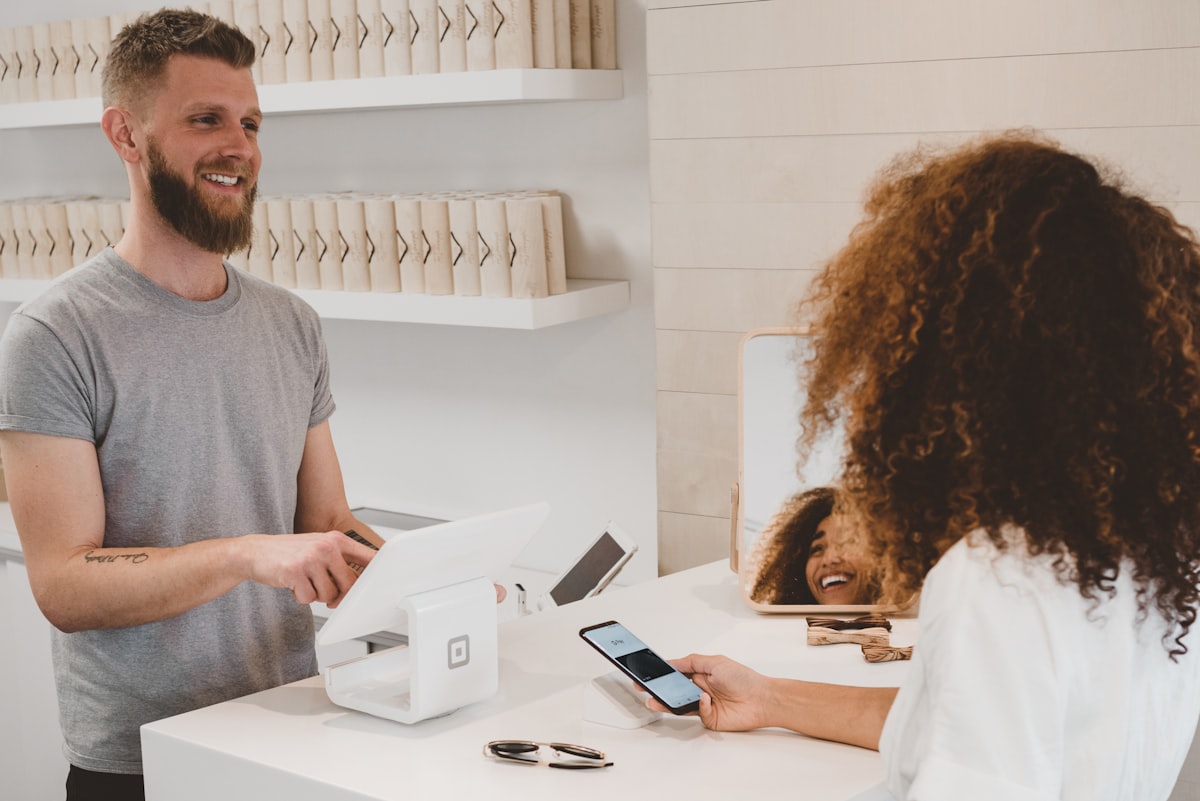
Walk into any electronics market and you will be offered two kinds of counter setup: a standalone billing machine (a keypad and a built-in printer in one box) or POS software running on a computer, tablet or phone with a separate thermal printer. Both print a bill. Only one of them runs your shop. This guide compares POS software vs billing machine honestly, so you can choose for your counter, not for the salesman's commission.
What Is a Billing Machine?
A billing machine is a self-contained device: you key in item codes or prices, it calculates the total and prints a receipt. Many models can store an item list and print tax lines. They are compact, simple, and need no computer.
Their limits show up as the shop grows. Item lists are small and tedious to update on a keypad. Reports are basic, stock is usually not tracked, and data sits on the device until someone exports it. If the machine dies, the records can go with it.
What Is POS Software?
POS (point-of-sale) software runs on hardware you may already own, such as a PC, laptop, tablet or phone, connected to a thermal printer and, optionally, a barcode scanner and cash drawer. Each bill updates stock, the customer's account and your GST reports at the same time. Cloud POS software also backs your data up off-site and lets you check sales from your phone.
POS Software vs Billing Machine: Side by Side
| Billing machine | POS software | |
|---|---|---|
| Prints bills | Yes | Yes (thermal and A4) |
| GST-compliant tax invoice | Depends on model | Yes, with GSTIN, HSN and the tax split |
| Item list | Limited, keyed in on the device | Thousands of items, imported from Excel |
| Barcode scanning | Some models | Yes (USB scanner or phone camera) |
| Stock tracking | Rarely | Yes, updated on every bill |
| Customer credit and dues | No | Yes |
| GST return reports | No | GSTR-1 / GSTR-3B data |
| Backup | On the device | Cloud, automatic |
| Bills on WhatsApp | No | Yes |
| Works without internet | Yes | Depends on the software |
| Cost model | One-time hardware purchase | Software fee (often yearly) plus a printer |
The Real Cost Comparison
A billing machine looks cheaper because it is one box. But compare the whole picture over three years:
- Billing machine: the device, paper rolls, repairs out of warranty, and the hours spent on manual stock checks and preparing GST data for your accountant.
- POS software: the software subscription, a thermal printer (and a scanner if you want one), and the device you run it on, often a computer or phone you already have.
For example, Billux's Standard plan is ₹2,500 a year, which is about ₹7 a day. Over three years that is ₹7,500 in software, plus a thermal printer. The question is not which box is cheaper. It is whether the time saved on stock, GST and collections is worth more than that. For most shops billing more than a few dozen bills a day, it is. Our billing software price guide breaks down the costs further.
Hardware You Need for POS Software
- A device: any PC or laptop with a browser, or a tablet or phone.
- A thermal printer: 80 mm for a full counter, 58 mm for compact or portable setups. USB or Bluetooth.
- A barcode scanner (optional): a USB scanner is fastest. A phone camera works for low volumes.
- A cash drawer (optional), usually connected through the printer.
The one real advantage of a billing machine is that it never needs the internet. Choose POS software that keeps billing when the connection drops and syncs later, and that advantage disappears.
When a Billing Machine Still Makes Sense
A tiny stall with a few dozen fixed-price items, no stock to track, no credit customers and no GST registration may be happy with a basic machine. As soon as you are registered under GST, carry real stock, or give udhaar, POS software pays for itself.
Billux as Your POS
Billux runs in the browser on a PC, laptop, tablet or phone, so there is nothing to install. It has separate counters for retail, supermarkets, pharmacies, restaurants, salons and clothing stores, all on 58/80 mm thermal printers or A4. It also handles USB or camera barcode scanning, split cash/UPI/card payments, cashier shifts, WhatsApp bills and GST reports. Offline billing is in the Professional plan (₹5,500 a year), and Standard is ₹2,500 a year (see pricing). For more, read our guides on cloud vs offline billing and barcode billing.
Questions to Ask Before You Buy
- Does it print a full GST tax invoice, with GSTIN, HSN and the CGST/SGST or IGST split?
- Can I import my item list from Excel?
- Does stock go down automatically with each bill?
- Can I see today's sales from my phone when I am not at the shop?
- What happens when the internet goes down, or the device breaks?
- What does it cost each year, all in, including updates and support?
- Does it support my trade? A bakery needs weights and expiry, and a mobile shop needs IMEI tracking.
Setting up a POS counter in an afternoon
Sign up, enter your shop details and GSTIN, import or add your top items, connect the thermal printer and print a test bill, then bill a few real sales with the owner watching. Most shops are billing for real the same day.
Thermal paper and print quality
Thermal receipts fade over months, faster in heat and sunlight. That is fine for a customer's slip, but never rely on paper as your only record. Software keeps every bill safe and reprintable, while a machine's memory may not. An 80 mm roll fits item name, quantity, rate and amount on one line, while 58 mm often wraps long names onto two lines. Buy rolls of decent quality: cheap paper prints faint and jams more often.
The Bottom Line
A billing machine prints bills. POS software runs the shop: stock, credit, GST, backups and customer messages from the same bill. Unless your counter is very small and very simple, choose POS software and a good thermal printer. Use the free trial to bill a real day's sales before paying, because that tells you more than any brochure or demo video.
Frequently Asked Questions
What is the difference between a POS and a billing machine?
A billing machine is a standalone device that calculates and prints bills. POS software runs on a computer, tablet or phone and also manages stock, customers, credit, GST reports and backups from the same bill.
Which printer is used for POS billing?
Most shops use an 80 mm thermal receipt printer. 58 mm printers suit small counters and portable setups. Both connect by USB or Bluetooth, and some by network.
Can I use my mobile phone as a POS?
Yes. Browser-based or app-based POS software can run on a phone, with a Bluetooth thermal printer and the phone camera as a barcode scanner.
Does POS software work without internet?
Some does. Look for offline billing that saves bills locally when the connection drops and syncs them when it returns.
Is a billing machine GST compliant?
It depends on the model and setup. A GST tax invoice must show your GSTIN, invoice number, HSN codes, taxable value and the tax split, which many basic machines cannot print.