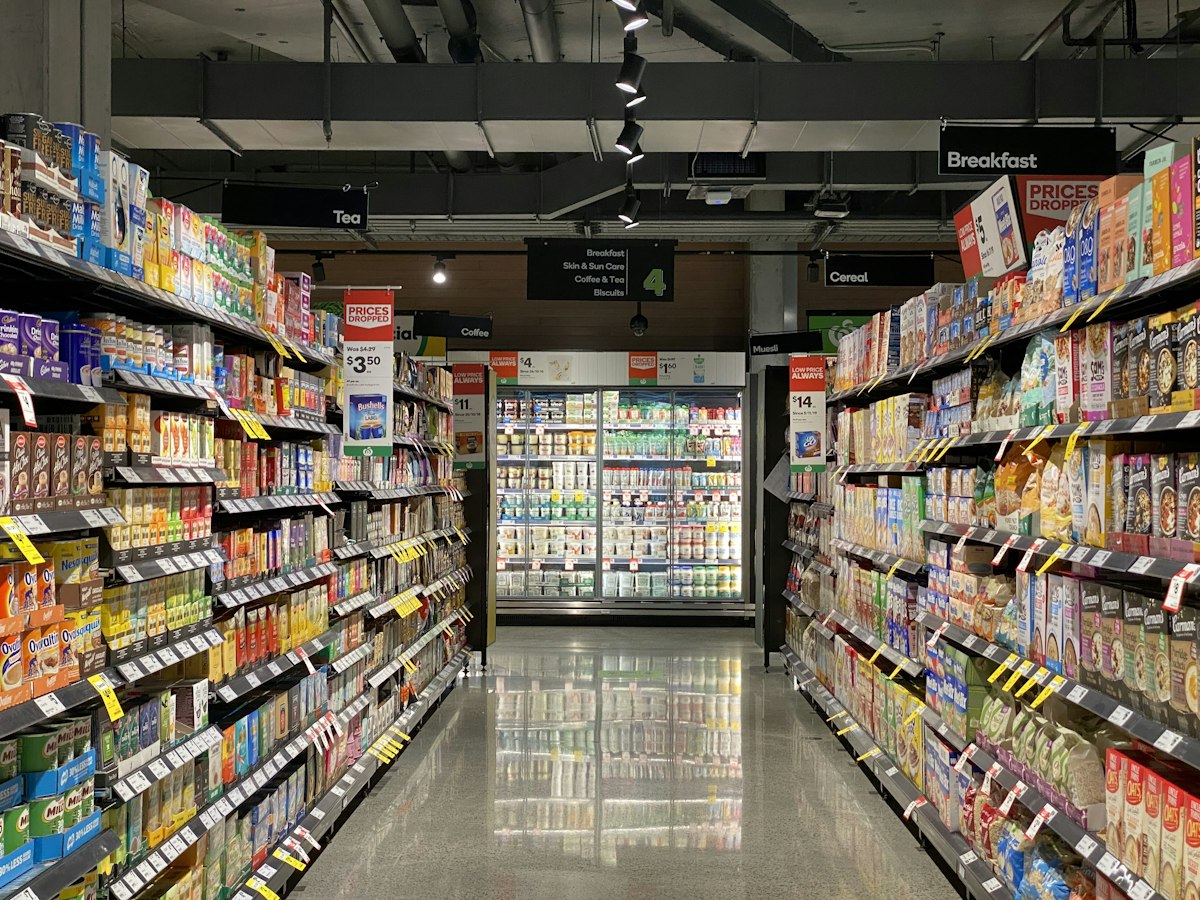
A supermarket is not just a retail shop with more SKUs. It's a high-speed operation where a cashier must process a basket of 20+ items in under two minutes, handle barcode scanning, apply loyalty discounts, accept split payments, and print a clean thermal receipt — all without making a single error.
Generic billing software built for service businesses or small traders simply cannot handle this. Supermarkets in India need purpose-built billing software that understands the counter, the stock room, and the GST return.
Why Generic Billing Tools Fail at the Supermarket Counter
Most small business billing apps are designed around a slow-paced model: select customer, add items manually, calculate total, generate PDF invoice. That workflow breaks down completely at a supermarket checkout counter where speed is everything.
At a busy supermarket billing station, a cashier needs to:
- Scan barcodes at the speed of the customer unloading the basket
- See running total on a customer-facing display
- Apply loyalty points automatically at checkout
- Accept part cash, part UPI in one split transaction
- Print an 80mm thermal receipt in under 2 seconds
- Continue billing even if the internet drops mid-shift
If your billing software can't do all of this natively, you're leaving money on the table — and creating queues that drive customers to a competitor.
7 Must-Have Features for Supermarket Billing Software
1. Barcode Scanning
Every item in your supermarket should have a barcode. The billing software must support USB and Bluetooth barcode scanners, instantly fetch the product name, MRP, and tax rate, and add it to the current bill. Manual item lookup at the counter is unacceptable at supermarket volumes.
2. Thermal Receipt Printing
80mm thermal receipt printers are the standard for supermarkets. Your billing software should print instantly — formatted receipts with store name, GSTIN, item list, totals, GST breakup, and payment summary. A 2-second print time is the target.
3. Loyalty Points System
Supermarkets run on repeat customers. A built-in loyalty program that awards points per rupee spent — and lets customers redeem at the counter — keeps customers coming back. This should be automatic, not a manual calculation by the cashier.
4. Real-Time Stock Management
Every sale should instantly deduct from your stock. When a product hits its minimum stock level, you need an alert. At supermarket scale, stock discrepancies of even 1-2% per month represent significant loss.
5. GST Auto-Calculation
Different products in a supermarket attract different GST rates. Since GST 2.0 (22 September 2025) it is 0% on fresh produce, milk, paneer and bread; 5% on most packaged food and daily-use items such as biscuits, ghee, soap bars, shampoo and toothpaste; 18% on items like detergents and electronics; and 40% on aerated drinks and tobacco. There is no 12% or 28% slab any more. The software must apply the correct rate per item automatically and generate a clean GST-compliant receipt. Check your items against our new GST rates list.
6. Customer Display Screen
A second screen facing the customer showing item names, quantities, and running total builds trust and reduces billing disputes. This is a standard feature in well-run supermarkets.
7. Offline Mode
Internet outages cannot shut down a supermarket. Your billing software must work offline and sync data automatically when the connection restores — no manual steps, no lost transactions.
A well-configured supermarket billing station should be able to process a 15-item basket — scan, total, payment, and print receipt — in under 90 seconds. If your current billing software takes longer, it's costing you customers during peak hours.
Billux vs Generic Billing Apps — Supermarket Feature Comparison
| Feature | Billux | Generic Billing Apps |
|---|---|---|
| Barcode scanner support | ✅ USB, Bluetooth & phone camera | Varies; often limited |
| 80mm thermal receipt | ✅ Direct print | Often PDF only |
| Customer display screen | ✅ Built-in | Rarely available |
| Loyalty points at counter | ✅ Auto earn & redeem (Professional) | Often manual or absent |
| Split payment (cash + UPI) | ✅ In one bill | Often single mode only |
| Offline billing | ✅ Offline counter (Professional) | Usually needs internet |
| Barcode labels | ✅ 35×25 mm and other label sizes | Often not available |
| Supermarket receipt format | ✅ Supermarket layout | Often a generic A4 format |
| Price (per year) | ₹2,500 + GST Standard / ₹5,000 + GST Professional (web) | Free to paid, varies |
How Billux Handles Supermarket-Specific Needs
Billux was built with the Indian retail counter in mind — not just invoice generation. Here's how it handles the supermarket use case specifically:
- 80mm thermal receipt — Formatted for supermarket receipts: store header, item list, GST breakup, payment summary, loyalty points balance
- Barcode labels — Print 35×25 mm or other common label sizes from the item list for products that don't have printed barcodes
- Split payment — Accept ₹300 cash + ₹247 UPI in a single transaction, with the receipt showing both
- Customer display — Second screen shows item name, price, and running total as the cashier scans
- Offline POS (Professional plan) — keeps the supermarket counter billing during internet outages and syncs automatically when the connection returns
- GST per item — Each product stored with its HSN code and tax rate; CGST/SGST calculated automatically at counter
Pricing: What Does Supermarket Billing Software Cost?
Many supermarkets in India still run on installed desktop software that needs a Windows PC, a yearly maintenance contract and a local vendor for updates, and that doesn't include cloud backup or mobile access. Prices vary widely by vendor, so compare written quotes.
| Software | Annual Cost | POS / Barcode | Cloud / Offline | Loyalty Points |
|---|---|---|---|---|
| Installed desktop POS | Licence plus yearly AMC (varies by vendor) | ✅ | ❌ / ✅ Desktop only | Often an add-on |
| Generic cloud billing | Free to paid (varies) | Often limited | ✅ / Varies | Often absent |
| Billux Standard | ₹2,500 + GST/yr (web) | ✅ | ✅ / ❌ | ❌ |
| Billux Professional | ₹5,000 + GST/yr (web) | ✅ | ✅ / ✅ Offline counter | ✅ |
Billux Standard (₹2,500 + GST a year on the web) covers the supermarket counter, barcode billing, thermal receipts, the customer display and cloud backup. Loyalty points and offline billing come with Professional (₹5,000 + GST a year on the web). The 7-day trial unlocks everything, so you can see which plan your store needs.
Start Your Free Trial
Billux offers a full 7-day free trial — no credit card needed. Set up your supermarket, add your products with HSN codes and barcodes, configure your thermal printer, and run a live billing session before you pay a single rupee.
Start free at billux.in/register. If it doesn't feel right for your supermarket, you owe us nothing.
For reorder levels, expiry and stock valuation, see our inventory management guide for small business.
Frequently Asked Questions
Which barcode scanner works with supermarket billing software?
Any USB or Bluetooth barcode scanner that types like a keyboard works with most billing software, including browser-based ones. They cost roughly ₹800 to ₹5,000. Billux can also scan with a phone or tablet camera.
What GST rates apply to supermarket items now?
Since 22 September 2025: 0% on fresh produce, milk, paneer and bread; 5% on most packaged food and daily-use items such as biscuits, ghee, soap bars and toothpaste; 18% on detergents and electronics; and 40% on aerated drinks and tobacco.
Can a supermarket counter keep billing if the internet goes down?
Only if the software has an offline mode. Billux's supermarket counter (Professional plan) saves sales on the device during an outage and syncs them when the connection returns. Reports and other screens need internet, so keep a mobile hotspot as a backup.
Does supermarket software need a customer display?
It is not mandatory, but a screen facing the customer showing each item and the running total reduces disputes and builds trust. Billux includes a customer display for its supermarket counter.
How fast should supermarket billing be?
A practical target is a 15-item basket scanned, paid and printed in under 90 seconds. Barcodes on every item, a good scanner, a thermal printer and one-tap UPI or split payment make the biggest difference.